

Will The Real Philosopher Please Stand Up?
On Stand-Up Comedy as the Last Public Philosophy

I am, by most reasonable definitions, the guy who brings up Nietzsche at parties. persistently. I have read the texts, and I have opinions (a lot of them). I have, at various points in my life, used the phrase “the will to power” in a sentence that did not require it. I own this about myself the way someone in their quarter-life crisis owns a mildly embarrassing tattoo.
So you can imagine my specific flavour of personal crisis when I watched Bo Burnham’s Inside and discovered that my favourite comic was confined to a small room with a camera, existential dread and a Netflix contract had done something that years of reading Kierkegaard had failed to do. He made me feel like someone was actually talking to me about what it means to be alive right now.

I watched it the first time alone at some undignified hour. Then I watched it again with people who hadn't asked. Then, a third time, trying to figure out what had happened. By the fourth viewing, I had accepted that I needed to think about this properly, which for me means writing several thousand words about it, which you are now reading. I'm sorry.
Anyhow, what I keep circling to is the idea that what Burnham was doing in that small room was philosophy. I mean not philosophy as it has come to exist, a guild activity conducted in hermetic confusing language for the benefit of other guild members, but philosophy as it was originally practised.
The argument I want to make is that stand-up comedy is the last space in which classical philosophy is practised in its original form. I am aware this sounds like exactly the kind of thing r/im14andthisisdeep would say. I promise I have evidence.
To understand what has been lost, you have to understand how thoroughly philosophy was once a public act, and how completely it stopped being one.
Socrates did not write. He argued in the agora, the Athenian marketplace, stopping politicians and craftsmen mid-errand to ask what they meant by justice. The Stoics delivered their doctrines from the stoa poikile, an open public walkway, because the point was that anyone walking past might stop and think differently about their morning. The Cynics were considerably less polite about it. Diogenes of Sinope rejected textual argument entirely. His philosophy was his body, performed in the streets: living in a barrel, telling Alexander the Great to stand out of his sunlight, engaging in acts of public self-satisfaction to make a point about desire that I will leave you to look up. Philosophy, in its original form, was confrontational, physically embodied, and dependent on the immediate judgment of a live audience.
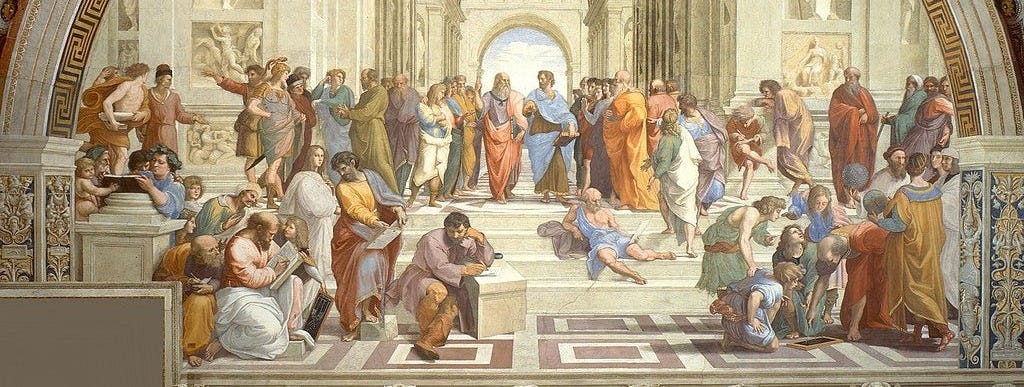
From the late eighteenth century onward, philosophy professionalised. The German university model imposed the specialised PhD. The philosopher stopped being a provocateur of the public square and became a credentialed knowledge worker. The language grew deliberately hermetic, designed for peers rather than passersby. Philosophers spent their careers in administration and committee work, running specialised journals that other specialists read, playing what one historian of the discipline described as "an insular game rather than an existential confrontation."
Anyway, in simple words, philosophy became gatekept by philosophers, which led to the emergence of stand-up comedians
The comedian on stage is performing a version of what Edmund Husserl called the epoché, the phenomenological reduction, which I realise is a sentence that sounds like I'm proving the ‘philosophy is for philosophers’ point, but stay with me. Husserl argued that the primary obstacle to genuine philosophical understanding is the unreflective, unquestioned acceptance of everyday life and all its social structures. We move through the world without examining it, which is efficient and also the reason most of us will die without seriously interrogating a single assumption we hold. The epoché is the suspension of all that, the deliberate act of making the familiar strange so it can be examined fresh.
This is exactly what observational comedy does. The rhetorical move of “Have you ever noticed?” is not a comedy tic. The comedian behaves like a visitor from another planet, vainly trying to disappear into practices humanity takes for granted and failing calamitously in the process. They take airport security, romantic relationships, the concept of mortality, the arbitrary mechanics of race, and force the audience to see the bare, often irrational architecture underneath. The laugh that follows a successful premise is not merely entertainment. It is the somatic proof of a philosophical insight: the sudden recognition of something always true but previously obscured by the anaesthesia of habit.
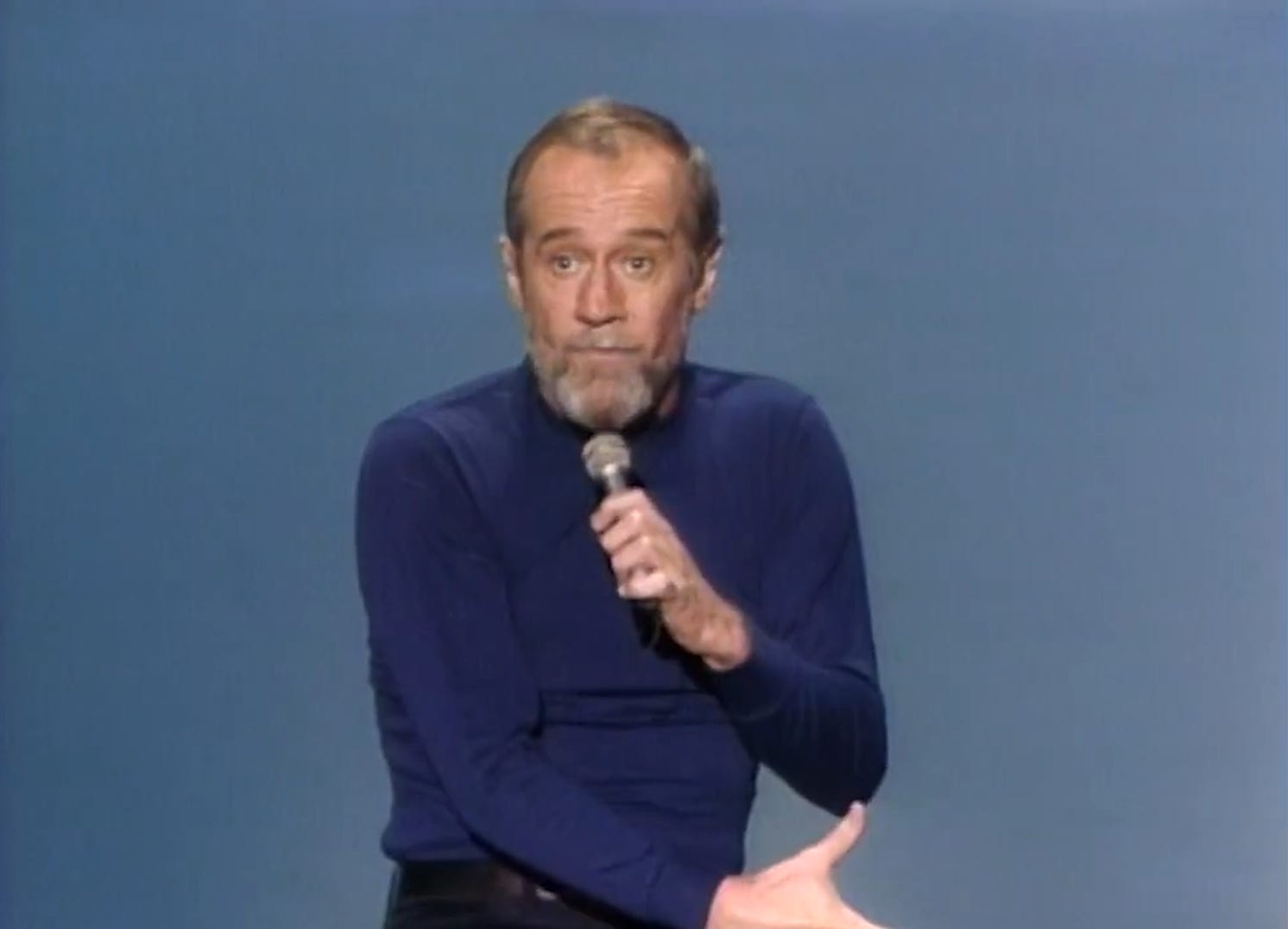
Husserl spent a career putting this into impenetrable German prose. George Carlin did it in four minutes about the word “stuff.” I am not saying Carlin was a better philosopher. I am just saying the woman in the third row understood Carlin.
The method of delivery, meanwhile, is Socratic in a way that is genuinely not a stretch. The comedian rarely approaches a dangerous topic directly. Direct moralising triggers the audience's defences immediately; the moment a comedian lectures, the room goes cold, and the comedian dies on stage. Instead, they feign ignorance, adopt an absurd position, play the fool, or lead you somewhere. The punchline is the moment of anagnorisis, the involuntary recognition. The laugh is the physical evidence that you arrived at a truth you didn’t know you were approaching. Kierkegaard called this indirect communication, and he considered it the only reliable method for delivering existential truths to people who, if addressed directly, would simply close the door. The comedian is the master practitioner. Kierkegaard was notably less funny, which is perhaps why his ideas took longer to reach people.
And then there is the body. Since Descartes, academic philosophy has treated the text as a disembodied artefact of pure reason. The comedian is a direct refutation of this. A comedian's pacing, their vocal inflexion, the precise physical gesture that makes an abstraction suddenly visible. To read a transcript of Richard Pryor is to encounter an almost entirely different thing from watching him perform. You cannot paraphrase a great comedy bit any more than you could paraphrase a Zen koan, and believe me, I have tried to do both with my friends, and both attempts have ended the conversation.
So if these stages serve as a new agora, the laughter becomes the new metric. Bergson argued in 1900 that laughter is an evolutionary mechanism, society's immune response to rigidity. We laugh when something mechanical encrusts itself on the living. Nietzsche, whom I promised I would not bring up for at least three more paragraphs and have now failed to keep, elevated laughter to a supreme philosophical virtue. wrote that “perhaps I know best why it is man alone who laughs; he alone suffers so deeply that he had to invent laughter”. He also wrote that “one does not kill by anger but by laughter” and that “to live is to suffer, to survive is to find some meaning in the suffering”. Nietzsche believed that laughter is the only remedy to suffering because he saw laughter as a way of affirming life and overcoming nihilism. In recent years, a Slovenian philosopher and fellow Substack writer, Žižek, argued that jokes are not illustrations of ideological contradictions; they are the site where those contradictions become visible in the first place. When an audience laughs at something dark, they are, briefly and together, acknowledging the architecture of a reality they spend the rest of their time pretending to accept.
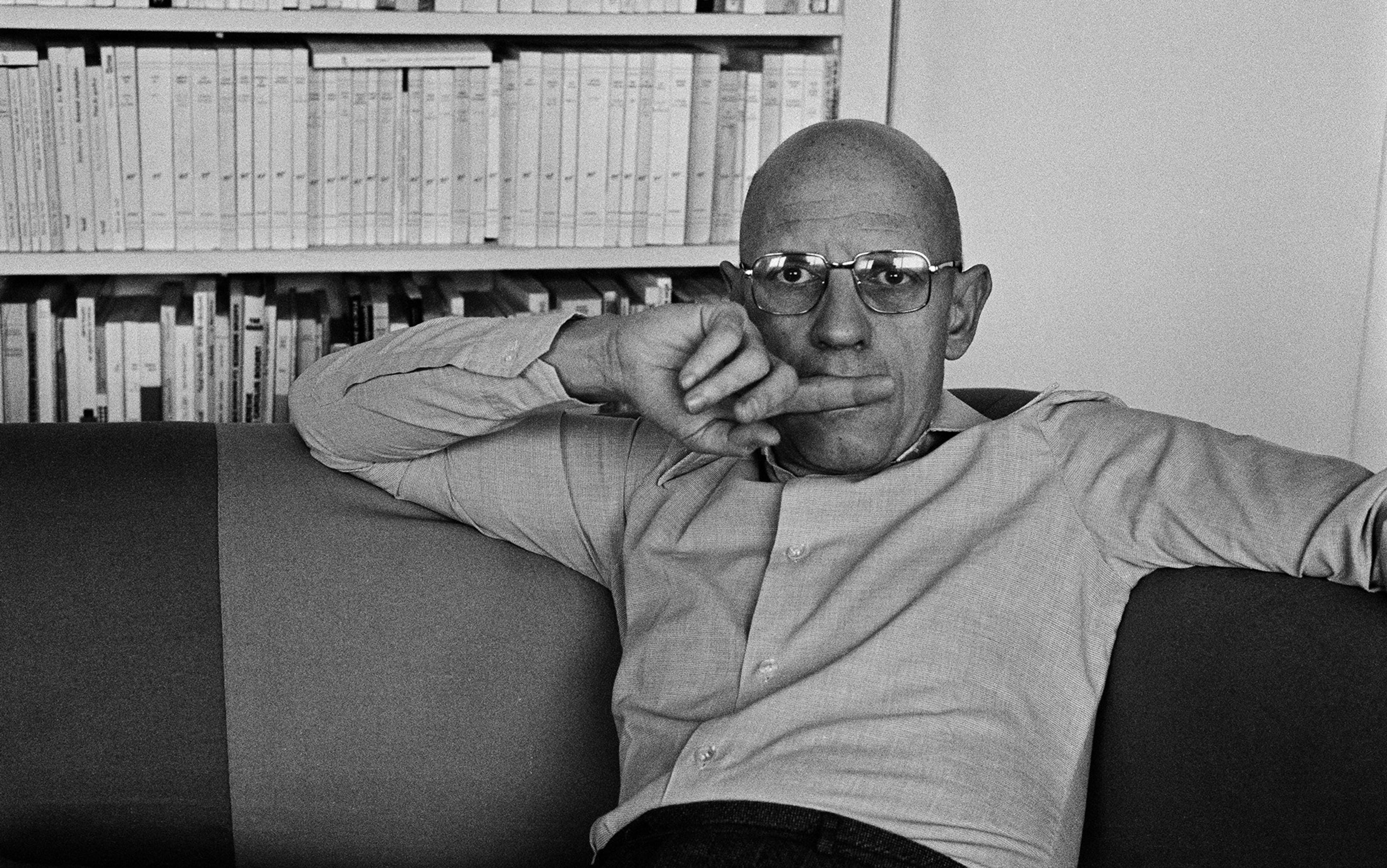
The classical concept that does the most work here is Michel Foucault's parrhesia: fearless speech (my friends would say I have an aversion to the same). The practice of speaking your personal relationship to the truth with absolute frankness, without flattery, without rhetorical manipulation, and despite the risk involved. The parrhesiastes always speaks from a position of relative weakness, criticising a tyrant, a state, a majority, from below. The authenticity of the claim is guaranteed precisely by the speaker’s willingness to accept the consequences.
The comedy club is one of the last places in the world where fearless speech is practised routinely, and the stakes are real.
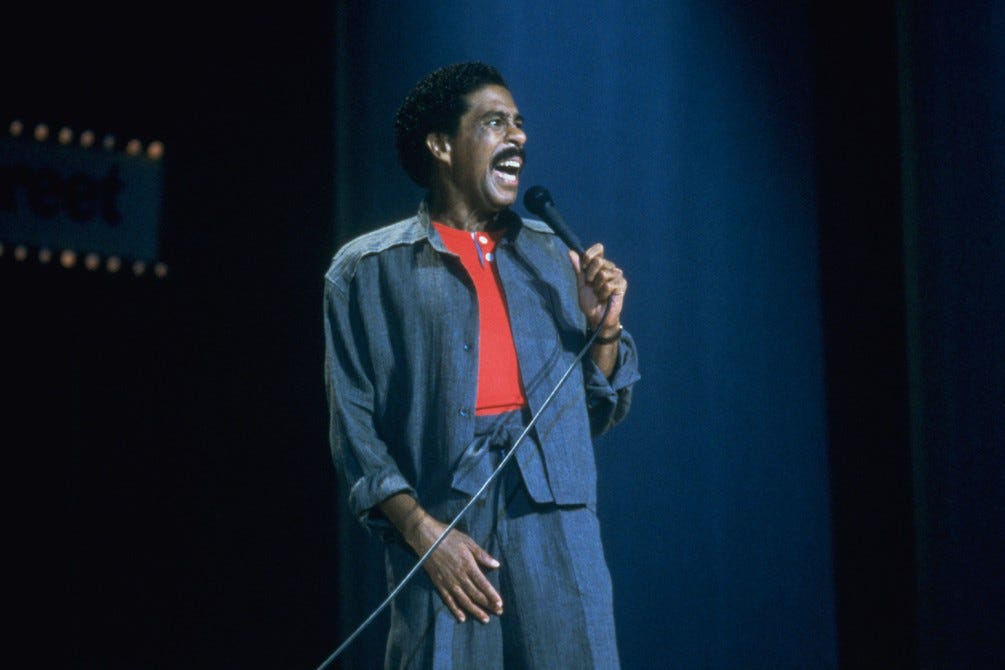
Richard Pryor is the obvious American example: turning lived Black experience into epistemology, forcing largely white audiences to confront police violence and racial terror through the only channel their defences couldn’t quite close. He had no institutional safety net.
However, the stakes Foucault was describing, the genuine personal consequences of standing between the truth and power with no protection, are perhaps most legible right now in India.
Over the past decade, Indian comedy clubs have become what the Italian Marxist Gramsci would have called subaltern public spheres: spaces where the hegemonic narrative of the state can be challenged by people operating outside formal political structures. The comedians who fill these stages are not academics with tenure. They are working in front of crowds, saying things the mainstream media has, in many cases, actively chosen not to say, which tells you something about the media and something about the comedians.
The consequences of this can be seen when Kunal Kamra’s persistent satire of the ruling government resulted in flight bans, eviction by a frightened landlord, and sustained legal harassment. When he performed a satirical song about a senior minister, a political mob physically demolished the Habitat comedy club where he had performed. I find myself laughing at the specific choice to demolish the room where the thing was said, as though the architecture was the problem.
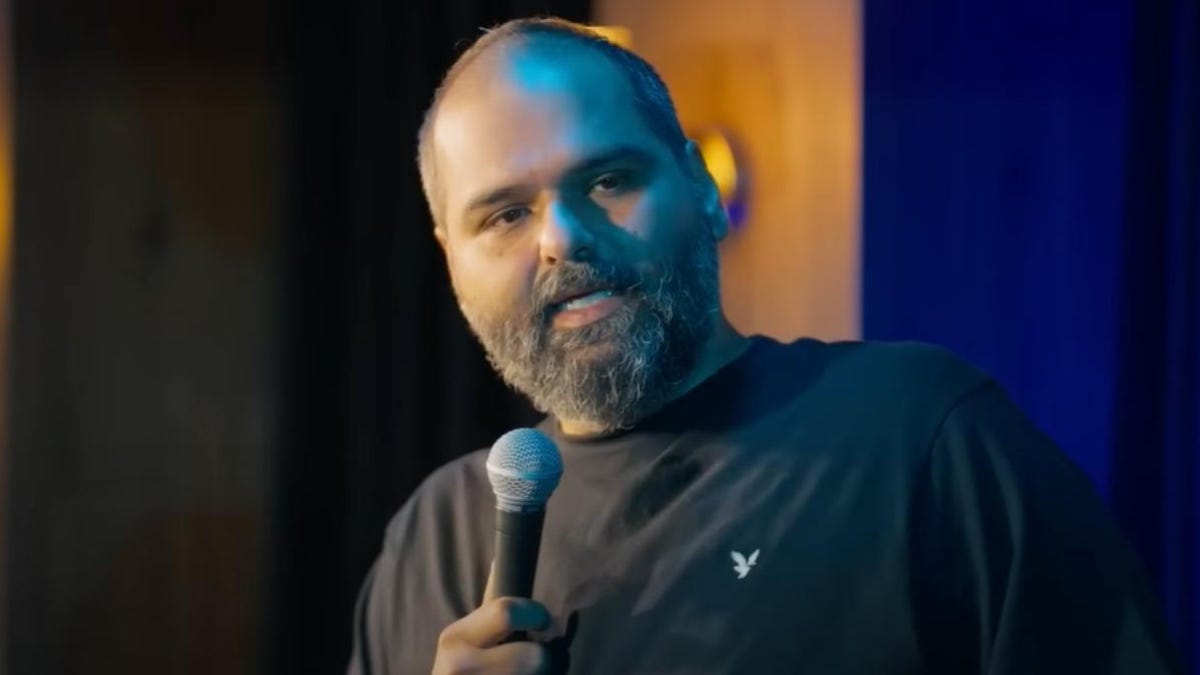
There is also a dimension to this that extends beyond electoral politics. The Indian stand-up scene, historically dominated by upper-caste, English-speaking men whose humour often relied on punching down, has increasingly become a site of caste contestation. Dalit comedians like Manaal Patil and Sanjay Rajoura are using the stage to make arguments about untouchability and systemic exclusion that formal academia either sanitises beyond recognition or quietly avoids
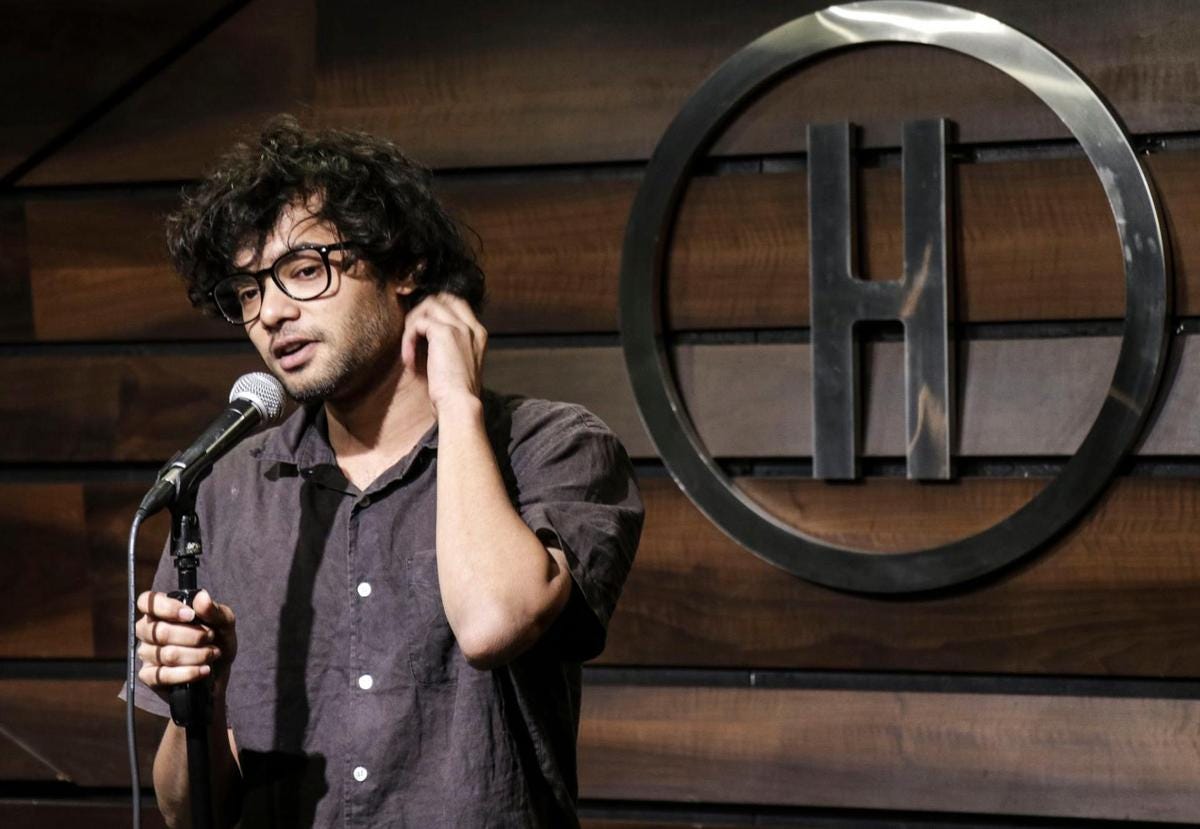
But the Indian scene's philosophical ambition doesn't stop at the political. It goes existential. It goes feminist. It goes, in one case, full Camus, which is not something I expected to type. Kanan Gill's specials, What Is This? and Is This It?, are essentially The Myth of Sisyphus delivered by a man who is visibly exhausted by the premise of his own life. Camus argued that the fundamental philosophical question is why, given the universe's complete indifference to human meaning-making, we do not all simply give up. He answered that we must imagine Sisyphus happy, that the act of continuing in full awareness of the absurdity is itself the rebellion. Gill arrives at roughly the same place, except via Indian bureaucracy and the specific dread of online dating, which, if you think about it, are both excellent illustrations of a universe offering no meaning
Indian comediennes have, meanwhile, turned the stage into a functional space for feminist philosophy that doesn't require the audience to have read Butler first. Urooj Ashfaq is the most compelling example of this. Her comedy operates at the intersection of gender, religion, and class in an almost precise way. Her argument has more in common with Simone de Beauvoir's insistence on situated, lived philosophy than with anything currently being published in academic journals on the subject.

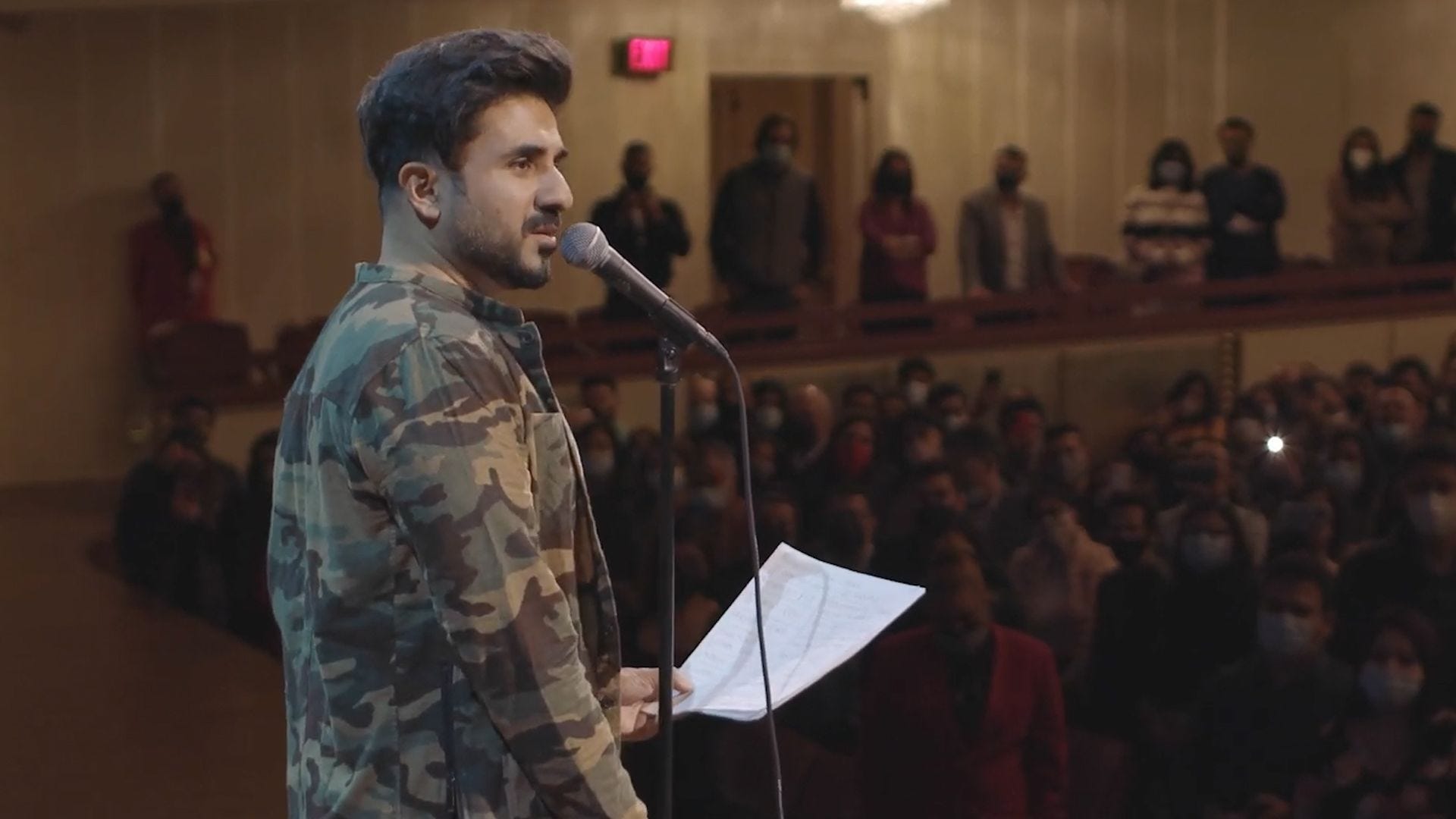
Sumukhi Suresh extends this into the territory of gender performance, body image, and the specific exhaustion of being a woman in an industry that would prefer you to be slightly less yourself. Both of them are doing the work that feminist theory describes. Then there is Vir Das's Two Indias, which is the piece I have thought about most in the context of this essay. The monologue describes, with precise and accumulating irony, the country that presents itself to the world and the country that its citizens actually inhabit: the India of ancient wisdom and the India of contemporary violence, the India of democratic ideals and the India of who actually gets to exercise them. It is, in the technical sense, a postcolonial critique, an examination of the contradictions produced when a nation inherits the structure of its own subjugation and then must build an identity around the gap between what it claims to be and what it demonstrably is. Scholars have written entire careers' worth of papers on this exact terrain. Das did it in four minutes,
Now, it’s not like no one had objections; they did. Herbert Marcuse's critique is the most potent. He argued that advanced capitalist societies neutralise dissent not through prohibition but through commodification: by allowing transgression in controlled, pleasurable outlets, the culture releases the critical energy that might otherwise produce genuine political action. Under this reading, the comedian who eviscerates the billionaire class is doing the billionaire class a quiet favour. The audience laughs, feels a cathartic jolt of rebellion, and then goes home to participate in the same systems the next morning.
There is absolutely a version of stand-up comedy that functions as exactly this. For every comedian operating with genuine parrhesiastic courage, there are ten more hosting panel shows or doing seven-minute bits about airline food.
The second objection is about rigour. Philosophy has tools: formal logic, systematic argument, and epistemic standards. A philosopher is obligated to follow an argument wherever it leads, even if the destination is uncomfortable, even if it empties the room. A comedian is a hostage to the crowd. As Bo Burnham puts it
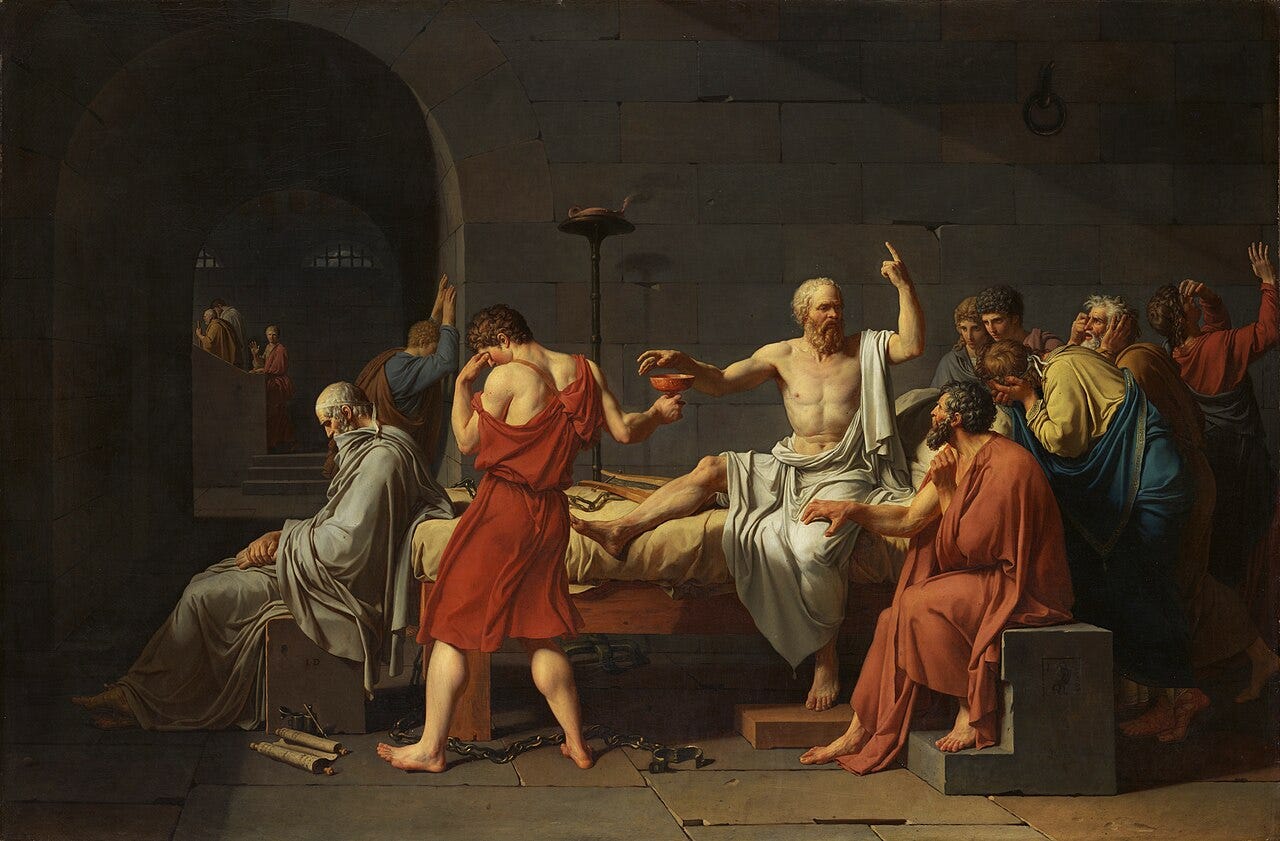
To say that comedy cannot be philosophy. It depends on the approval of a live, fickle audience, because it must hold the room and survive the immediate judgment of the people in front of it, is to forget entirely the conditions under which Socrates operated. Socrates had no institutional backing. He had to be physically engaging enough that the person he'd stopped in the marketplace didn't simply walk away. He read the room. He performed. He was ultimately condemned and executed by the polis, which is the stand-up comedian's nightmare made literal and permanent
I am aware that this essay is itself a kind of proof of the Marcusean critique: I have, in several thousand words, converted a genuine intellectual crisis into a readable piece of cultural writing, which you will finish and then probably close and return to your life unchanged. I have released the pressure. I have replaced the revolution with a Substack-adjacent PDF.
Anyhow,The agora isn’t empty. It never really was. It just moved indoors, turned the lights down, and started charging a two-drink minimum. Which, honestly, is an improvement. Socrates would have been considerably more tolerable with a drink in hand.
I would know. I bring him up at parties.
as someone who doesnt know the p of philosophy, this made too much sense to me all of a sudden. i loved this piece so much.
this was such a fun read because every time i thought “okay this comparison is a stretch,” you somehow made it make sense😭😭 the point about “have you ever noticed?” being basically phenomenology for normal people was genuinely my favorite part nd also LOVEDthat you included the Marcuse critique instead of pretending comedy automatically equals resistance