

the plot was familiar, the commentary wasn't
a self-aware mystery that leans into cliché while quietly dismantling the industry behind it

rarely do i get the pleasure of reading a book that makes me want to write a review immediately after i finish reading it. it might be the sadness of the book ending that’s making me do this, but let’s not psychoanalyse every action i make.
The Ending Writes Itself is a debut by Evelyn Clarke, the pen name for V.E. Schwab (author of Bury Our Bones in the Midnight Soil) and Cat Clarke (author of Entangled). 7 struggling midlist authors are invited to spend a weekend on Skelbrae, the island which the bestselling author Arthur Fletch calls home. only after reaching the island do they find out that Fletch is dead, without completing the final and most anticipated book from his series.
Skelbrae welcomes Sienna and Malcolm (aka Penn Stonely, their pen name, thriller authors), Millie (YA author), Kenzo (horror author), Jaxon (sci-fi author), Priscilla (romance author) and Cate (thriller author). They are tasked with ghostwriting Fletch’s last novel. 72 hours, 10,000 words. 1 million dollars plus the promise of relaunching their own sad and hopeless careers.
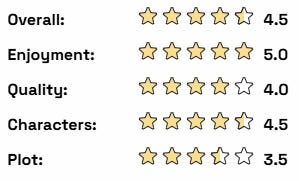
oh, the fun i had when reading this book. the characters were distinct — there wasn’t any character development per se, but they were predictable. you could imagine what their next move would be and why. even though i felt that the ending was hurried, it was a nice little conclusion to the story.
the premise — a group of people trapped on an island — doesn’t exactly reinvent the wheel, and the book doesn’t pretend otherwise. there are only so many directions such a story can take, and yes, at some point, you know there will be a wild goose chase. but the familiarity works in its favour. the narrative leans into the conventions of the locked-room mystery instead of trying to outsmart them, which makes the reading experience feel both accessible and self-aware.
there were a few unnecessary subplots, like a certain book made of gold? it didn’t serve the plot and when it came back, that was also totally random as well.
i had picked it out randomly, didn’t know it had just been published, hadn’t heard the name of the author at all. didn’t know it was co-authored by V.E. Schwab, not that i’ve ever read any of her works before. after reading this book, i’m excited to read some of the other works by these authors. i see online that Bury Our Bones in the Midnight Soil has received great praise, but then i see the page count and realise that it’s in the same booklists as katabasis and i suddenly feel very tired.
what elevates the novel, though, is its underlying satire. early on, it becomes clear that this isn’t just a mystery — it’s a commentary on the publishing world itself. the book holds up an unflattering mirror to the industry, exposing its resistance to risk, its reliance on formula, and the often unforgiving landscape faced by new authors. you can’t help but wonder what editors and publishers thought while reading it — whether they saw themselves reflected in its critique, and if so, how comfortable that reflection felt.
interestingly, the book carries echoes of Haunted by Chuck Palahniuk — perhaps because of the shared uncomfortable proximity the books forced struggling authors into. both books are centered around a central figure who brings this misfit group of people together rallying behind a singular goal — to become a better writer. whether intentional or not, the comparison adds another layer to the reading experience, at least for me it did.
the book, being published in 2026, is not devoid of the mention of AI in writing. it adds nothing to the plot, but it does help explain how a certain someone was able to get invited on the island.
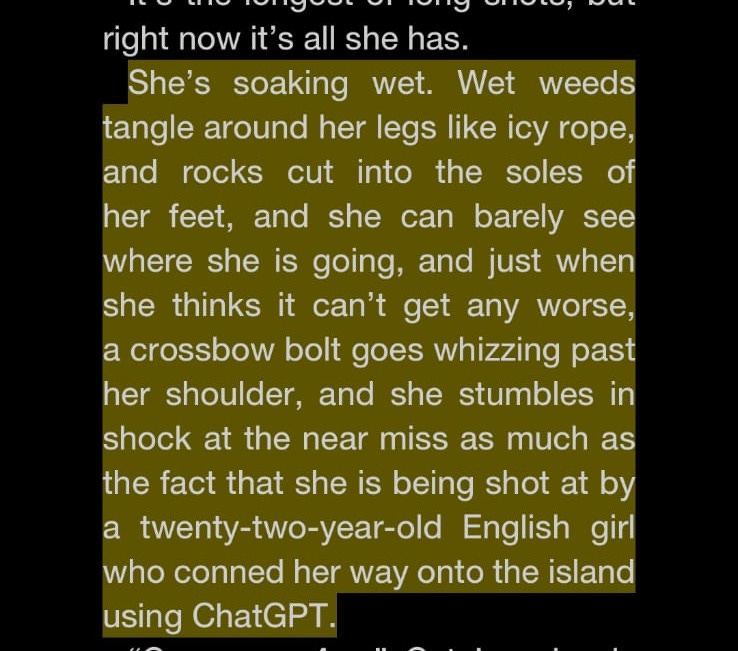
online, though, you’ll find readers conflicted. some are saying the ending was underwhelming. others are criticising the book because they expected more since V.E. Schwab coauthored it. personally, I found it thoroughly enjoyable. it’s a solid locked-room mystery that doesn’t try to be more than it is — but quietly becomes more through its satire.
i’d recommend it to anyone looking for a compelling, self-aware mystery, or for those interested in a fictionalised glimpse into the realities of the publishing world. whether it’s an accurate portrayal is another question entirely — but as someone outside that world, it certainly feels convincing enough.
who are the madonnas and wh*res of bollywood?

I grew up watching Bollywood movies with my mother, sitting on the floor, completely absorbed in the movie that was playing on the television. I think I was around 11 when I realized the women in Bollywood could only play two roles. Roles that I never saw myself embodying. I sometimes wonder what it must be like to be a boy watching the same films. Did …
What We Lost When Bollywood Abandoned Children's Cinema

I went to see Dhurandhar at an INOX in Delhi, somewhere in the first week of December. The multiplex lobby had three boys in it, nine or ten years old, kicking each other gently while their father argued with the ticket counter about allowing the kids in, which was not going to happen. The father surprisingly won. The boys filed in behind him. Dhurandha…
Why We Keep Rooting for the Men Who Destroy Everything?

Here is something I did recently that I am not proud of: I spent twenty-five minutes explaining Viltrumite reproductive biology to my flatmate while he was trying to watch football. He did not ask. He has not asked about anything I watch since. I have lost a captive audience and possibly a friendship, and I would do it again.