

Hydrangea

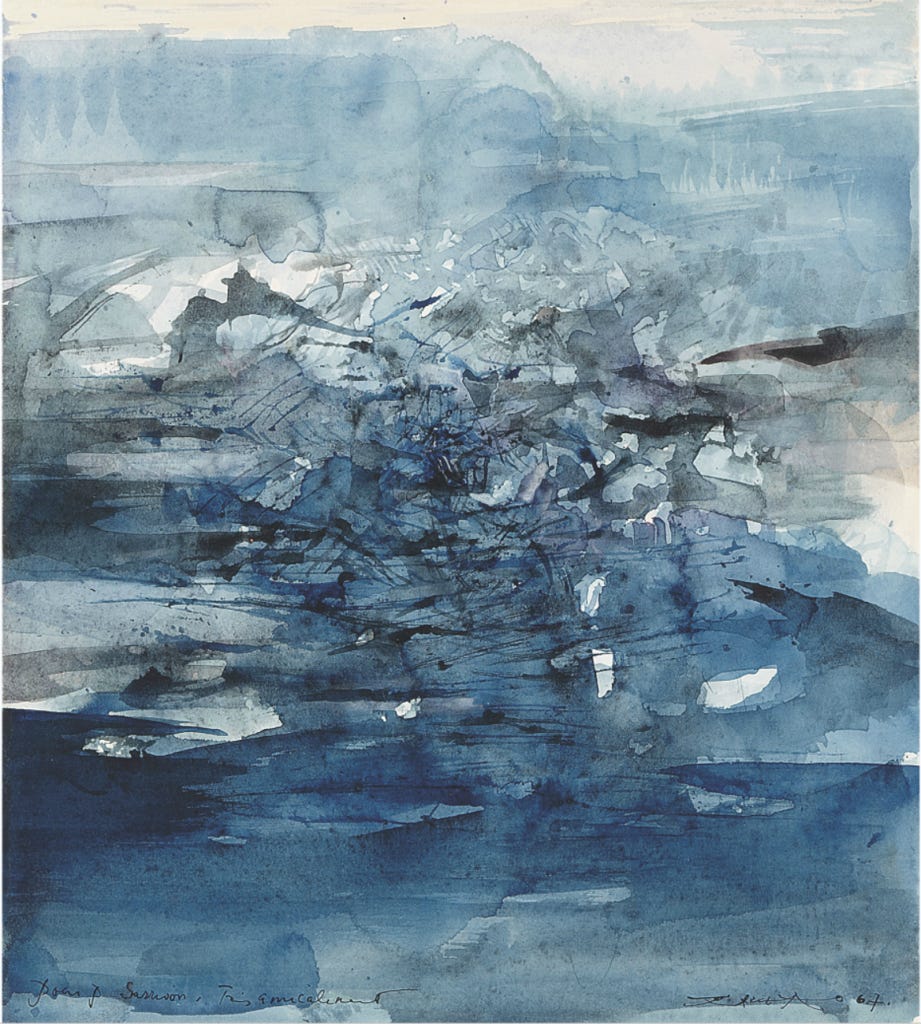
The clouds were hydrangeas. If you could run your fingers through them, they would part and merrily disintegrate into formless debris. Their locomotion occurred in varying shades of blue: tenderly violent, an ideal craftwork of mild melancholy and simple pleasure, a showcase of measured delirium that spoke of heaven and sang of death. The hues seemed to threaten with their cordial air, promising neither thunder nor comfort. It was a contradiction, the ambivalence of emotions turning the landscape upside down. What did it insinuate? The clouds were trying to tell you something. It was quite evident they were sad, but their swirling currents of lavender fog were too sinister to be mistaken for softness.
It was poison or LSD. Tumbling down the levels of consciousness and witnessing your own necrosis from afar, it was unclear whether it was drugs or death. Perhaps they are synonymous, but it was a pleasurable death. Moisture everywhere, so grim, but a brain full of snus. There were women in the clouds, or nymphs; if they were harpies, they were quite beautiful with their silvery hair, although their faces were so unsettling to look at. How were they flying with thin film for skin and thin leather for wings? They were made of alcohol spirit with an absolute lack of flesh. So much grey for a colourful world. You wondered where the colours had gone. Blue was here; she’d never leave. Purple, grey, and black were sinister.
You had been falling this entire time, because there was no ground underneath. What seemed like swirling madness was your atmosphere, a cruel suspension with no end in sight. The speed at which the fall manifested was anxiety-inducing, because you never felt it. What else was unknown? It felt like a resin suspension but the subtle buoyancies betrayed the true nature of the fall, cutting so smoothly like you were simply dragged through soft water.
The harpies touch you now, peeling back the flimsy cotton from your chest. They bore dirty, long fingernails, the claws of vultures, but their faces were so juvenile and motherly, the affection only a feral child would have. These were feral children. They don’t judge your lips tinged with blue, the decay at your margins, or the guilt that it was taking too long. They remain watchful throughout.
About the Author:
Akshara is a writer of prose, poetry and essays and is the creator behind Springtimefuneral, a literary publication on Substack dedicated to explore what it means to be alive. Currently exploring a long list of hobbies, including playing the piano, she draws inspiration from music and literature and loves Lana Del Rey.
 |
|